

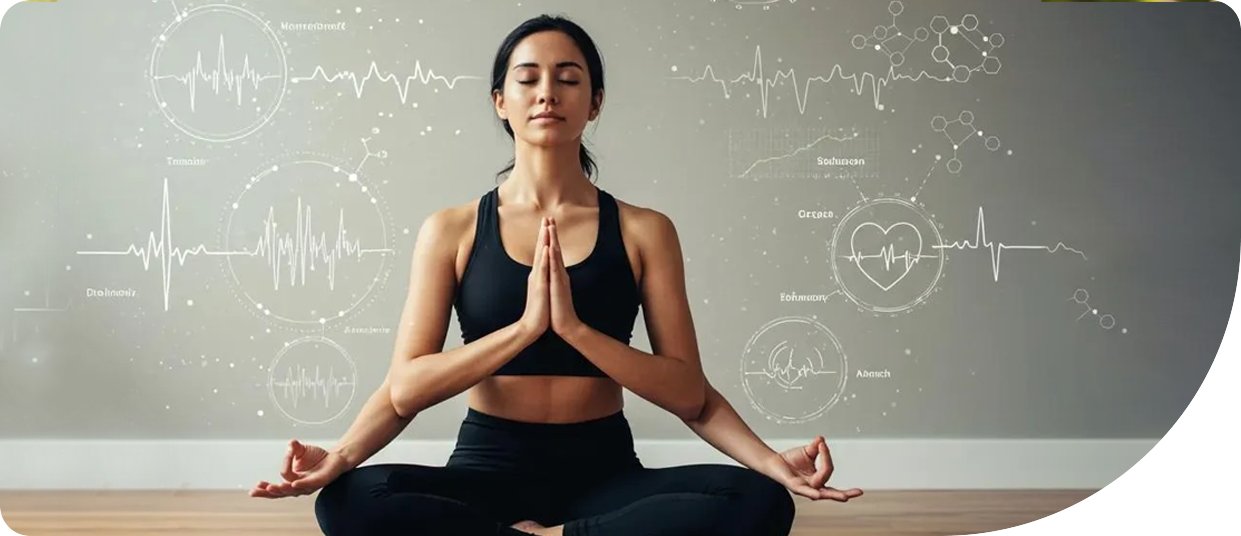
Yoga cultivates a profound mind-body connection by synchronising breath, posture and awareness to foster resilience and balance. Research indicates that over 75 percent of regular yoga practitioners report enhanced mental clarity alongside improved muscular flexibility. In this guide you will discover what the mind-body connection entails, the science and philosophy behind yoga’s union of mental states and physical health, and how specific techniques, poses, breathwork and mindfulness, promote emotional equilibrium. We will explore yoga’s impact on stress relief, sleep quality and resilience, outline tailored practices for families, aged groups and individuals, and introduce Wellness On Shore holistic yoga programs. By the end, you will understand practical steps to deepen self-awareness, integrate mindful movement into daily life and book community-focused classes designed for all levels at Wellness on Shore.
What Is the Mind-Body Connection and How Does Yoga Enhance It?
The mind-body connection describes how thoughts, emotions and physical states influence one another in a continuous feedback loop. Yoga enhances this union by combining deliberate postures (asanas), controlled breathing (pranayama) and focused attention (dhyana) to regulate the nervous system. For example, coordinating each inhalation and exhalation with movement calms the parasympathetic response, reducing cortisol and fostering mental clarity. This foundational concept underpins every aspect of holistic well-being, linking mental calmness to improved circulation, flexibility and stress resilience.
Yoga: Uniting Body, Mind, and Soul for Holistic Health
The term “yoga” originates from the Sanskrit root yuj, meaning “to join”. It signifies the union of body, mind, and soul. Yoga is also recognised as a spiritual science of self-realisation. The Indian sage Patanjali, in his Yoga Sutra, defines yoga as a practice for controlling the afflictions of the mind. Yoga transcends religion, beliefs, ethnicity, gender, and health conditions. It is not a philosophy or ideology but rather an experiential practice that influences our cognition. Asanas, pranayama, dhyana, and so forth, enable the practitioner to perceive their state of existence. Health can be quantified in numerous ways and is often represented by various metrics and diagnoses that do not always offer the most accurate depiction of what a truly healthy body and mind entails. While contemporary Western medicine has yielded many remarkable and life-saving advancements, one of its limitations is the frequently compartmentalised approach to health, which examines the body in terms of individual symptoms and isolated components.
By engaging muscles in specific alignments while maintaining mindful awareness, yoga creates neurophysiological coherence between mind and body. Muscle stretch receptors communicate relaxed states to the brain, which in turn modulates heart rate and stress hormone release. This real-time dialogue between brain and body anchors the practice in both ancient philosophy and modern neuroscience. Understanding this mechanism leads us to examine the precise ways yoga integrates mental focus with physical movement.
How Does Yoga Integrate Mind and Body for Holistic Health?
Yoga integrates mind and body through three core processes that synchronise awareness, breath and movement.
- Breath-Movement Coordination Combining inhalations and exhalations with each posture strengthens vagal tone and balances autonomic activity.
- Focused Attention Directing awareness to bodily sensations enhances proprioception and emotional regulation.
- Conscious Transitions Smooth shifts between asanas maintain sustained mental presence and fluid energy flow.
These integration methods build a seamless connection that supports both emotional balance and physical strength, paving the way for deeper scientific exploration of yoga’s effects.
What Scientific Evidence Supports the Mind-Body Connection in Yoga?
Scientific studies confirm that regular yoga practice modulates key physiological markers linked to the mind-body connection.
These findings demonstrate how yoga’s combination of asana, pranayama and meditation regulates the central and autonomic nervous systems to deepen the mind-body union and sustain holistic health.
What Are the Historical and Philosophical Roots of Yoga’s Mind-Body Union?
Yoga’s mind-body union originates from Patanjali’s Yoga Sutras, which define yoga as the “yoking” of mind and body through an eight-limb framework.
- Yama and Niyama – Ethical foundations guiding mental clarity
- Asana – Physical postures that strengthen and align the body
- Pranayama – Breath control that directs pranic energy
- Pratyahara to Samadhi – Gradual inward focus and meditative absorption
This philosophical lineage emphasises that ethical conduct and disciplined practice create a stable platform for physical and mental integration. Tracing these roots highlights how contemporary classes at Wellness on Shore honour ancient traditions while applying evidence-based methods to unlock holistic well-being.
How Does Yoga Improve Mental Well-Being and Emotional Balance?
Yoga improves mental well-being by engaging the mind in intentional movement and breath regulation, which reduces stress and fosters emotional resilience. Research as of October 2025 shows that a consistent yoga routine increases self-reported well-being and lowers anxiety scores by up to 30 percent. This effect arises from the combined influence of enhanced parasympathetic activity, endorphin release and mindful self-reflection. Integrating these practices into daily life builds sustainable mental strength and emotional equilibrium.
Yoga as a Holistic Mind-Body Practice for Integrated Well-being
Yoga is an integrated lifestyle comprising varied practices, including commitments related to lifestyle and values, physical practices, breathing practices, and internal practices (e.g., concentration and meditation), undertaken with mindfulness and intention. Yoga is holistic in that it addresses all layers or aspects of human consciousness, including the body, vitality (arousal and affect), mind (thoughts and emotions), wisdom, and interconnection, co-regulation, and deep embeddedness within a greater web of life. Integrated holistic yoga fosters a practice of accessibility and affiliation for all individuals, irrespective of age, physical abilities, gender, culture, body shape, and more (Brems, Ancient Wisdom and Modern Science of Yoga: A Companion for 200-Hour Yoga Teacher Training for Healthcare and Allied Healthcare Settings. Self-Published, 2024). All yoga practices, whether movement-, breath-, or meditation-related, are carefully adapted and offered using strategies, demonstrations, and props that encourage universal participation. Integrated holistic yoga serves as a potent, effective preventive, interventional, or adjunctive treatment for numerous physical and mental disorders through its profound effects on anatomy, neurophysiology, vitality, cognition, emotion, behaviour, and relationships. Salutary effects are mediated via enhancement and integration of top-down and bottom-up processing. Top-down processing activates higher-level brain structures and networks and facilitates affective, emotional, cognitive, and behavioural self-regulation through attentional control, mindfulness, executive functioning, and metacognition. Bottom-up processing activates lower-level brain structures and networks to generate perceptions and reactions based on sensory inputs from internal and external sources. Integration of bottom-up awareness with top-down capacity for reflection facilitates physiological and emotional regulation.
Regular practice stimulates neurotransmitters associated with mood regulation, creating a positive feedback loop between body and emotions. Muscle engagement during asanas signals the release of endorphins, while pranayama balances oxygen levels, directly impacting brain chemistry. This interplay leads into a detailed look at specific mental health benefits and self-awareness cultivation through mindfulness yoga.
What Are the Mental Health Benefits of Regular Yoga Practice?
Regular yoga practice offers multiple psychological benefits:
- Stress Reduction: Lowered cortisol helps manage daily tension.
- Anxiety Management: Breath-focused techniques ease acute worry.
- Mood Improvement: Endorphin release enhances overall positivity.
- Cognitive Clarity: Focused movement increases concentration and memory.
These advantages arise from yoga’s capacity to synchronise physiological relaxation with conscious awareness. Understanding these core benefits prepares us to explore how mindfulness yoga deepens self-awareness and emotional regulation.
How Does Mindfulness Yoga Promote Self-Awareness and Emotional Regulation?
Mindfulness yoga combines asanas with deliberate attention to present-moment sensations, fostering self-awareness and emotional control. By observing thoughts non-judgmentally during practice, individuals learn to identify rising tension and redirect focus to breath and posture. This process strengthens neural pathways responsible for interoception and emotional resilience. Through regular mindfulness sessions, practitioners develop an ability to regulate reactions outside the studio, reinforcing the mind-body connection in everyday life.
Can Yoga Improve Sleep Quality and Psychological Resilience?
Yes, yoga improves sleep quality by activating the parasympathetic nervous system and modulating stress hormones. Bedtime sequences incorporating gentle stretches, diaphragmatic breathing and guided relaxation help lower heart rate and prepare the body for restorative sleep. Over time, consistent practice builds psychological resilience by enhancing coping mechanisms and reducing the impact of stressors, leading to deeper rest and sustained emotional balance.
Which Yoga Techniques Foster Stress Relief and Anxiety Management?
Yoga employs specific techniques, postural sequences, breathwork and relaxation practices, to alleviate stress and regulate anxiety. Postures that open the chest and hips counteract tension stored in muscles, while pranayama directs focus inward to calm racing thoughts. Combined with guided meditation and restful poses, these methods activate the relaxation response, creating a holistic toolkit for managing everyday stress and anxiety.
What Are the Best Yoga Poses (Asanas) for Stress Reduction?
Practising these asanas helps release muscular tension and calm the nervous system:
- Child’s Pose – Gently stretches the back and signals safety to the brain.
- Supine Bound Angle – Opens hips to release stored emotional stress.
- Legs-Up-the-Wall – Inverts circulation to promote relaxation.
Incorporating these poses into a short sequence can reduce stress markers within minutes and pave the way for breath-focused practices.
How Does Breathwork (Pranayama) Calm the Nervous System?
Breathwork techniques like Ujjayi, Nadi Shodhana and diaphragmatic breathing regulate autonomic function by stimulating the vagus nerve. Controlled inhalations and exhalations lower heart rate and balance oxygen and carbon dioxide levels, shifting the body into a parasympathetic state. This physiological shift directly reduces feelings of anxiety and prepares the mind for deeper relaxation or meditation.
What Meditation and Guided Relaxation Practices Support Anxiety Relief?
Yoga Nidra, guided body scans and mindful meditation practices anchor awareness in the present moment, interrupting anxious thought patterns. Yoga Nidra systematically guides practitioners through stages of deep relaxation, balancing neural activity and reducing amygdala activation. Integrating these methods after asana and pranayama creates a comprehensive anxiety-management routine that promotes sustained calm.
How Can Different Age Groups and Families Benefit from Yoga’s Mind-Body Connection?
Yoga offers adaptable practices that cater to distinct audiences, aged groups, families and individuals, by adjusting intensity, focus and pacing. Gentle sequences and breathwork support mobility and cognitive function in older adults, while playful partner poses and family flows foster connection and mutual awareness. Beginners benefit from simplified postures and guided instruction, ensuring a safe introduction to mind-body harmony. Recognising these tailored benefits highlights yoga’s universal applicability and community-focused value at Wellness on Shore.
What Yoga Practices Are Suitable for Aged Groups to Enhance Well-Being?
Aged groups benefit from gentle chair-supported asanas, slow-paced breathing exercises and guided relaxation that maintain joint health and cognitive clarity.
These practices foster safe engagement and sustained mental and physical well-being among older practitioners.
How Does Yoga Support Families in Cultivating Mind-Body Harmony?
Family yoga incorporates partner stretches, laughter-inducing transitions and collective breathing exercises that build trust and open communication. Shared practice encourages intergenerational bonding and models emotional regulation for younger members. By focusing on synchronised movement and shared moments of stillness, families develop empathy and a collective sense of calm that extends beyond the mat.
What Are the Benefits of Yoga for Individuals at All Levels?
Yoga offers scalable challenges and modifications that suit every ability, from gentle flows for beginners to advanced asana variations for seasoned practitioners. Each individual gains improved flexibility, stress resilience and mind-body integration. Personalised adjustments and instructor guidance ensure safety and progress, enabling a continuous journey toward holistic balance.
What Holistic Wellness Programs Does Wellness on Shore Offer to Unlock the Mind-Body Connection?
Wellness on Shore combines yoga, and meditation to deliver integrative programs designed for all ages and levels. Our community-focused studio in Australia offers accessible classes that emphasise mindful movement and inner balance. You can book Gentle Flow, Vinyasa or Restorative yoga classes, or join specialised family and aged-group sessions. Class schedules and booking information are available on our website at Wellness on Shore, providing a seamless way to engage with our supportive environment.
Which Yoga Class Styles Promote Mind-Body Harmony at Wellness on Shore?
We offer three core yoga styles that each deepen mind-body integration:
- Gentle Flow: Slow, mindful transitions for stress relief and flexibility.
- Vinyasa: Dynamic sequences that synchronise breath and movement for mental clarity.
- Restorative: Supported poses and guided relaxation to activate deep calm.
Together, these styles cater to diverse preferences and health goals.
How Does Pilates Complement Yoga for Core Strength and Mindful Movement?
Pilates enhances body awareness by focusing on core stability, alignment and controlled breathing. Integrating Pilates with yoga amplifies postural support, reduces injury risk and deepens proprioceptive awareness. This combined approach strengthens the physical foundation while reinforcing mindful engagement.
What Specialised Programs Are Available for Families, Aged Groups, and Beginners?
Our studio runs tailored programs that address unique community needs. Family sessions blend playful partner poses with breathwork to foster connection. Aged-group classes use gentle supports and modified sequences to promote mobility and mental clarity. Beginner workshops introduce foundational postures, breathing techniques and meditation in a welcoming, non-judgmental setting.
How Can You Book Classes and Join Community Events at Wellness on Shore?
Booking is straightforward through our website at Wellness on Shore or by contacting the studio directly. Regular community events include mindfulness workshops, themed yoga gatherings and seasonal retreats that encourage social support and sustained practice. Joining these offerings integrates you into a vibrant community dedicated to holistic well-being.
What Are the Key Benefits of Mindfulness Yoga and Holistic Yoga Practices?
Mindfulness yoga and holistic practices enhance present-moment awareness, emotional balance and combined physical-mental health through integrated techniques. Cultivating focused attention during movement builds resilience and fosters deep self-knowledge, while holistic sequences unite asana, breathwork and meditation for synergistic benefits. Recognising these advantages highlights why combining multiple yoga modalities sustains long-term well-being.
How Does Mindfulness Yoga Enhance Present Moment Awareness and Focus?
Mindfulness yoga teaches practitioners to observe each breath and bodily sensation without judgment, sharpening concentration and interrupting reactive thought patterns. This heightened awareness translates to improved decision-making and stress management in daily life.
What Role Does Yoga Play in Emotional Balance and Stress Reduction?
Yoga’s integrated approach reduces stress by lowering cortisol, boosting endorphins and activating the relaxation response. Emotional balance emerges as practitioners learn to observe thoughts and feelings with equanimity, fostering stable moods and adaptive coping strategies.
Yoga Techniques for an Improved Mind-Body Connection and Emotional Balance
that yoga incorporates, such as controlled breathing, mindful postures, relaxation, and, in some cases, formal meditation, which may lead to the development or enhancement of
How Can Holistic Yoga Practices Support Physical and Mental Health Together?
Holistic yoga blends dynamic asana, conscious breath regulation and guided meditation to address multiple dimensions of health simultaneously. Physical benefits, strength, flexibility and posture, combine with mental advantages, clarity, resilience and emotional regulation, in a unified practice that nurtures whole-person wellness.
What Are Common Questions About Yoga and the Mind-Body Connection?
Many newcomers wonder how yoga links mental states and physical wellness, and seasoned practitioners seek clarity on therapeutic applications. Common inquiries include whether yoga can effectively manage anxiety, what yoga therapy entails for mental health support, and how breathwork and meditation deepen the mind-body union. Addressing these themes underscores yoga’s broad relevance and prepares individuals to choose practices that align with their goals and lifestyles.
How Does Yoga Connect the Mind and Body?
Yoga connects mind and body by orchestrating movement, breath and focused attention into a cohesive practice that simultaneously calms neural pathways and engages muscles. This integrative process modulates the autonomic nervous system, creating a balanced feedback loop between emotional states and physiological responses.
Can Yoga Help Manage Anxiety and Stress Effectively?
Yoga effectively manages anxiety and stress by reducing cortisol levels, enhancing vagal tone and promoting endorphin release. Techniques such as restorative poses and alternate-nostril breathing interrupt the fight-or-flight response and cultivate sustained calm.
What Is Yoga Therapy and How Does It Support Mental Health?
Yoga therapy applies personalised asana, breathwork and mindfulness protocols to address specific health conditions. In mental health contexts, therapeutic sequences are designed to regulate mood, increase neural resilience and support emotional regulation in individuals facing anxiety, depression or stress-related disorders.
How Do Breathwork and Meditation Enhance the Mind-Body Link?
Breathwork and meditation deepen the mind-body link by training practitioners to observe internal processes and regulate autonomic function. Conscious breathing stimulates the vagus nerve, while focused attention retrains neural circuits toward calm and clarity, reinforcing the integrated state achieved during yoga practice.
Embracing yoga’s union of mind and body creates a resilient foundation for mental clarity, emotional balance and physical vitality. By understanding the science, philosophy and tailored techniques, individuals, families and aged groups can harness specific practices, from asanas and pranayama to restorative flows and mindful meditation, to sustain holistic well-being. Wellness on Shore’s yoga classes foster community connection and personal transformation. Begin your journey to deeper self-awareness and balanced health by exploring our offerings and integrating these practices into your daily routine.